Capsaicin 8% patch repeat treatment plus standard of care (SOC) versus SOC alone in painful diabetic peripheral neuropathy: A randomised, 52-week, open-label, safety study
Journal article
Published on December 6, 2016

Capsaicin 8% patch repeat treatment plus standard of care (SOC) versus SOC alone in painful diabetic peripheral neuropathy: A randomised, 52-week, open-label, safety study

Vinik AI, Perrot S, Vinik EJ et al.

BMC Neurology

VIEW PUBLICATION

10.1186/s12883-016-0752-7

Link copied successfully!

This page provides a summary of the PACE clinical trial, primarily based on Vinik AI et al. BMC Neurol. 2016;16(1):251 and complemented by key findings from Vinik AI et al. J Curr Med Res Opin. 2019;2(12):388–401. It is a simplified representation of the key points that was created by Averitas Pharma, and should not be considered a replacement for the full articles or their abstracts. Please refer to the original publications for further details and disclosures.

At the time the PACE study was conducted, the capsaicin 8% topical system was not approved by the FDA for painful diabetic peripheral neuropathy of the feet. The authors explained that the 30-min application time was chosen to align with the approved Summary of Product Characteristics in the UK and that a 60-min application time was evaluated to ensure that the safety objectives of the study were fully covered with respect to possible exposure periods.

Since its approval in the USA in 2020, the capsaicin 8% topical system is not approved by the FDA as a 60-min application for diabetic peripheral neuropathy, and the safety and effectiveness of this dosage have not been established. The recommended dose of capsaicin for neuropathic pain associated with diabetic peripheral neuropathy is a single, 30-min application on the feet of up to four topical systems. Treatment may be repeated every three months or as warranted by the return of pain (not more frequently than every three months).

Please refer to the additional Important Safety Information below and Full Prescribing Information.

Summary

Investigating the long-term safety and tolerability of capsaicin 8% topical system in patients with painful diabetic peripheral neuropathy of the feet (PACE study)1

Background

Painful diabetic peripheral neuropathy, a common complication of diabetes, negatively impacts patient quality of life (QOL), affecting mood, sleep, work, self-esteem, and relationships.1 Symptoms include numbness, tingling, burning, aching, or lancinating pain.1

Capsaicin 8% topical system (previously known as capsaicin 8% patch) is a topical treatment designed to deliver high concentration capsaicin directly into the skin, inducing a mechanism of temporary neurolysis (or defunctionalization) in hyperactive nociceptors.1,2 A phase 3, randomized, double-blind, placebo-controlled trial (STEP study) showed that capsaicin 8% topical system provided sustained pain relief up to 12 weeks after a single application, was well tolerated, and was not associated with sensory deterioration in patients with painful diabetic peripheral neuropathy of the feet.1,3

PACE was the first trial evaluating the long-term safety and tolerability of repeat treatments of capsaicin 8% topical system in patients with painful diabetic peripheral neuropathy of the feet.1 The primary endpoint was the total score of the Norfolk Quality of Life-Diabetic Neuropathy (QOL-DN) questionnaire, which captured the impact of nerve fiber dysfunction on QOL in diabetic neuropathy.1 An increase in the Norfolk QOL-DN total score would indicate functional consequences associated with potentially deleterious effects of capsaicin treatment on peripheral nerve endings.1

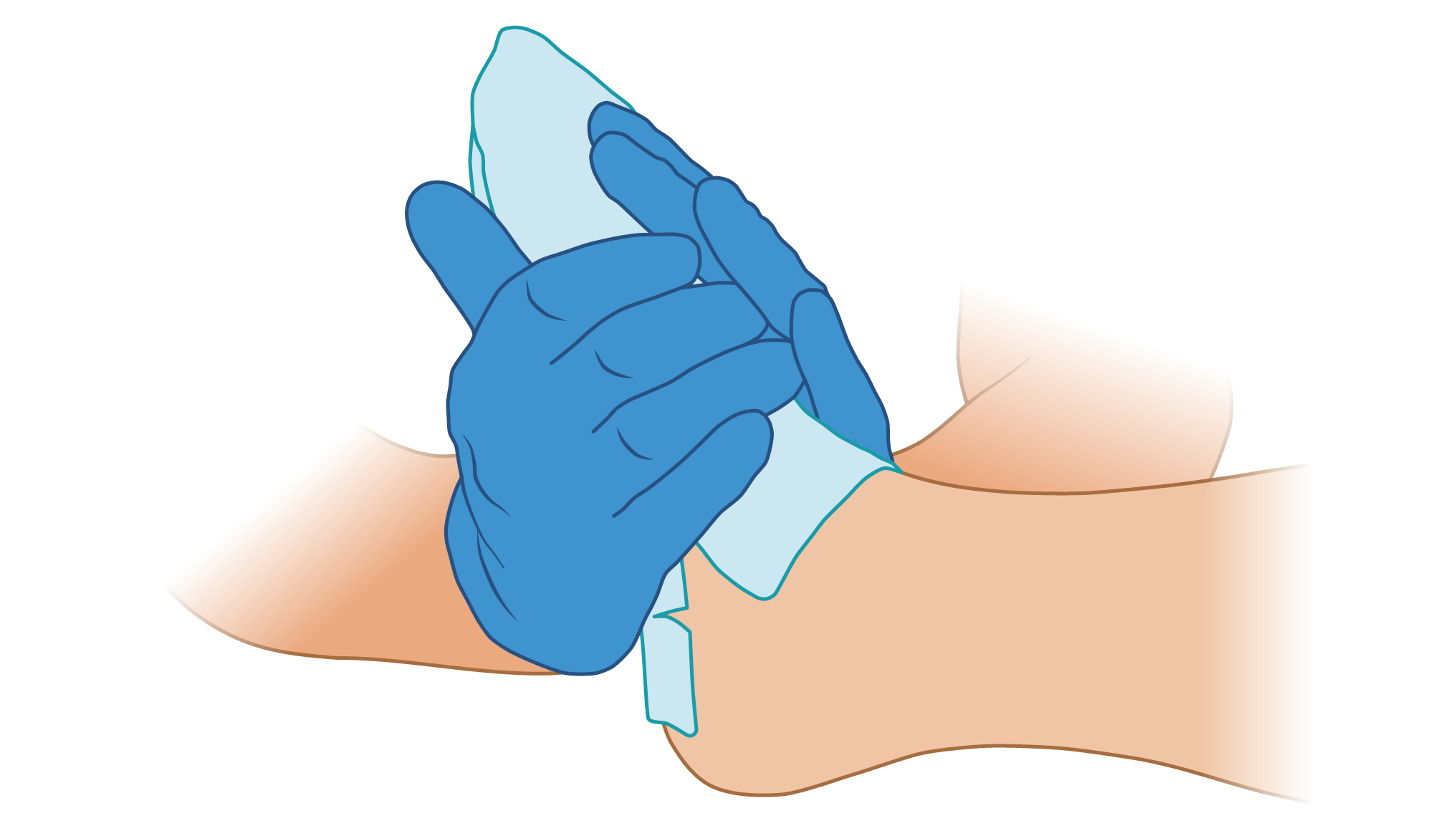
Application of capsaicin 8% topical system on the foot of a patient with painful diabetic peripheral neuropathy of the feet

Aim

PACE was a phase 3, multinational, open-label, randomized controlled trial evaluating the safety and tolerability of repeat treatment with capsaicin 8% topical system (30-min or 60-min application) plus standard of care (SOC) for painful diabetic peripheral neuropathy of the feet, compared with SOC alone, over 52 weeks (ClinicalTrials.gov Identifier: NCT01478607).1

Key findings

Patient disposition and use of capsaicin 8% topical system

Patients had similar baseline characteristics across the three treatment groups (30-min capsaicin 8% topical system application plus SOC, 60-min capsaicin 8% topical system application plus SOC, and SOC alone).1

Average intervals between capsaicin re-treatments were 68.4 days and 68.3 days for 30-min and 60-min applications, respectively.1 More than half (53.4%) of the patients treated with capsaicin 8% topical system received seven treatments (maximum permitted by the study design).1 Re-treatment was allowed to occur no sooner than every 8 weeks at the discretion of the investigator.1

The mean Norfolk QOL-DN total score decreased from baseline to Week 52 indicating no deterioration of function in the capsaicin 8% topical system plus SOC groups (primary endpoint)1

The mean changes in Norfolk QOL-DN total score were1:

No deterioration of function was also seen with the Utah Early Neuropathy Scale (UENS) in both capsaicin 8% topical system plus SOC groups.1

Capsaicin 8% topical system was well tolerated and treatment-emergent adverse events (TEAEs) were similar between the capsaicin treatment groups and were generally mild or moderate in severity1

The most frequent TEAEs were application site pain, burning sensation, and erythema.1 No worsening of sensory perception of cold, warm, sharp, and vibration stimuli was seen with capsaicin 8% topical system over the course of
the study.1

The PACE study also demonstrated the effectiveness of long-term pain relief and improved QOL in the capsaicin 8% topical system plus SOC groups4

Mean percentage change in Brief Pain Inventory-Diabetic Neuropathy (BPI-DN) scores from baseline to Week 52 were4:

A greater improvement in QOL from baseline to Week 52 was seen with capsaicin 8% topical system plus SOC compared with SOC alone, as shown with the mean change from baseline in the EuroQol 5-dimension visual analog scale (EQ-5D VAS) scores4:

Conclusions

The PACE study investigated the safety of capsaicin 8% topical system repeat treatment plus SOC over 52 weeks, showing that the treatment was well tolerated and raised no new safety concerns compared with SOC alone.1 It had no negative functional or neurological effects compared with SOC alone.1 Long-term pain relief and improvement in QOL were also seen.4

Limitations

The study’s open-label design, while potentially more representative of clinical practice than a double-blind design, may have introduced bias in safety evaluations, as patients and investigators were aware of the treatment being administered.1 Although physicians assessing neurological function were blinded, the lack of blinding for patients and investigators could have influenced outcomes.1 The Last Observation Carried Forward (LOCF) imputation method used for missing data is conservative and may have led to worse estimates compared to a non-imputed analysis.1 Statistical analysis was limited, as p-values were not calculated to complement the 90% confidence intervals for between-group differences.1 Quantitative Sensory Testing (QST) was not performed due to lack of standardization and training across study sites, and instead, ‘bedside’ sensory testing was used, which may have reduced sensitivity in detecting subtle sensory changes.1 The impact of concomitant opioid use on the results was not fully addressed.1 Additionally, the predominantly Caucasian study population (99%) may limit the generalizability of findings to patients of other ethnicities.1

Related content

Footnotes

BPI-DN, Brief Pain Inventory-Diabetic Neuropathy; CI, confidence interval; EQ-5D, EuroQol 5-dimension; FDA, United States Food and Drug Administration; QOL, quality of life; QOL-DN, Quality of Life-Diabetic Neuropathy; SD, standard deviation; SOC, standard of care; TEAE, treatment-emergent adverse events; UENS, Utah Early Neuropathy Scale; UK, United Kingdom; USA, United States of America; VAS, visual analog scale.

QZA-01-25-0006 | March 2025