DPN
Mechanism of action


Contributors:
Armstrong DG, Bley K, Simpson DM et al.
DOI:
10.2147/JEP.S526968
Topics:
Mechanistic insights into diabetic peripheral neuropathy and the high-concentration (8%) capsaicin topical system1
Diabetic peripheral neuropathy arises from metabolic imbalances and microvascular nerve damage, and often results in limb pain, numbness, and paresthesia.1
Transient receptor potential vanilloid subtype 1 (TRPV1) receptors are key mediators of peripheral nociceptive signaling.1 Small-diameter, TRPV1-expressing fibers in the distal extremities are affected early during the development of diabetic peripheral neuropathy, followed by progressive involvement of larger sensory fibers.1
As neuropathy advances, epidermal nerve fiber density (ENFD) decreases, and surviving TRPV1-expressing fibers exhibit functional dysregulation and increased excitability, contributing to neuropathic pain.1
Hyperglycemia and its downstream effects damage the small blood vessels that supply peripheral nerves, leading to abnormalities such as reduced peripheral blood flow and decreased mediators of blood vessel formation.1 Because sensory nerves depend on oxygen and nutrients from these vessels to function properly, this microvascular dysfunction further exacerbates nerve injury.1
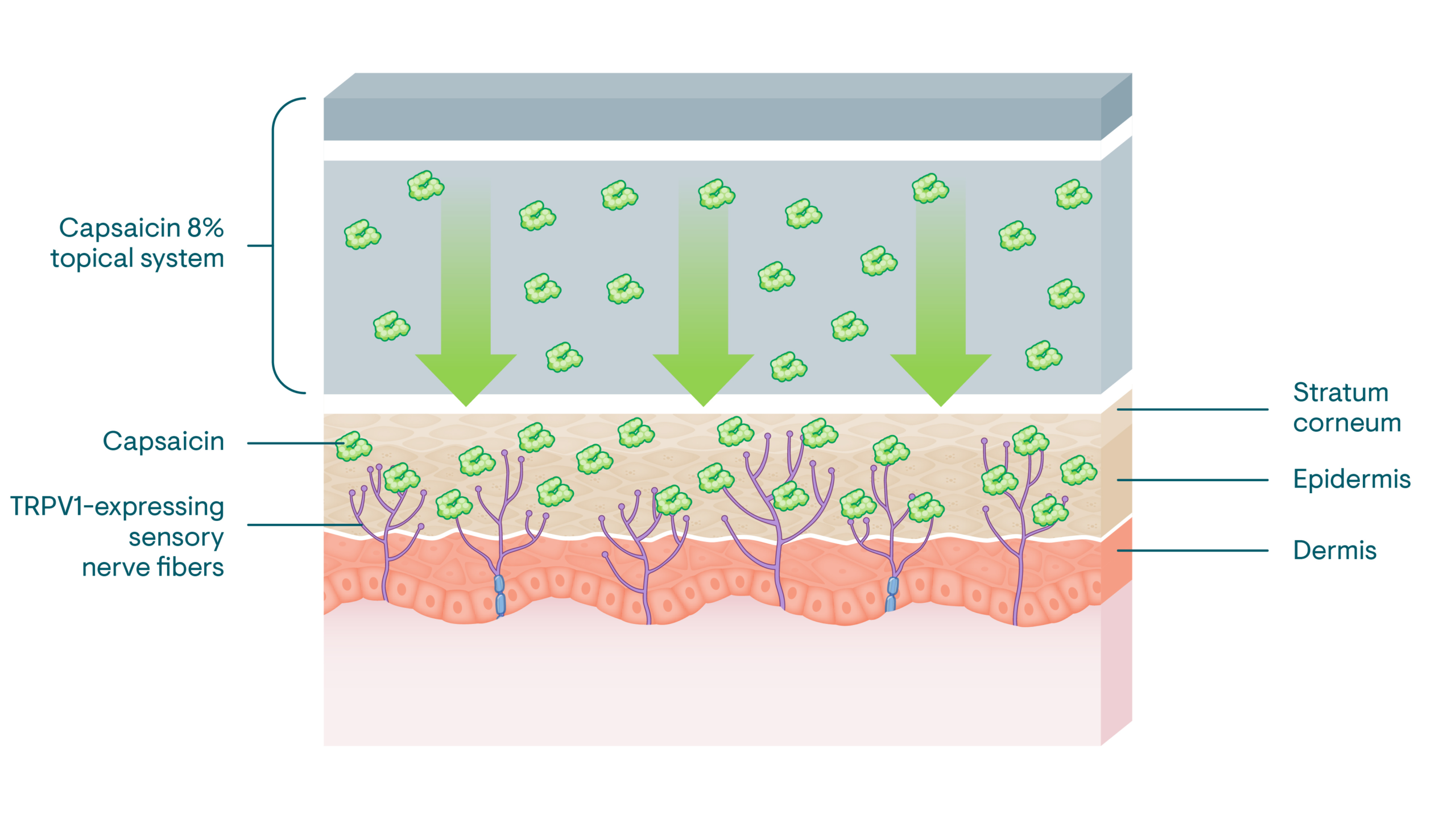
The capsaicin 8% topical system (here referred to as high-concentration capsaicin topical system) acts locally on TRPV1-expressing fibers.1 The publication discusses clinical studies evaluating pain reduction and explores potential effects on nerve fiber regeneration.1
The matrix technology in the high-concentration capsaicin topical system enables forced diffusion of capsaicin into the skin, where capsaicin targets and activates TRPV1.1,2
Sustained TRPV1 activation increases calcium influx through TRPV1 channels and releases from intracellular stores, triggering downstream processes that lead to temporary neurolysis of affected nerve terminals.1,2
Pain signaling is suspended, contributing to long-lasting analgesic effects following a single 30-minute treatment.1,2
Over time, TRPV1-expressing fibers regenerate with increased ENFD, reduced hyperexcitability, and improved neurogenic vasodilation.1
Download our infographic and watch our video below to learn more about the mechanism of action of the high-concentration capsaicin topical system.
See the referenced publications and the Full Prescribing Information for complete details.
Skin biopsy data showed that treatment with high-concentration capsaicin topical system leads to localized, reversible neurolysis of TRPV1-expressing nerve fiber terminals, followed by regeneration over time.1,3 Evidence suggests that regenerated epidermal nerve fibers may return with a more normalized phenotype, which may contribute to changes in sensory function and pain perception.1
Regenerating nerve fibers were detected within weeks following treatment with high-concentration capsaicin topical system and correlated with the time when pain relief tends to become significant.1

Progressive increases in nerve fiber density over 1–3 months in both painful and non-painful diabetic peripheral neuropathy were accompanied by improved axon reflex vasodilation, which may support increased local perfusion.1

Due to the persistent effects of diabetes on nerve fibers, additional treatments may be necessary for continued pain relief.1 Following repeated treatment, data suggest that nerve fibers return to a more normative state, including reduced hyperexcitability and improved neurogenic vasodilation.1 These healthier nerves respond more normally to stimuli.1

High-concentration capsaicin topical system is described as providing pain relief through temporary neurolysis of TRPV1-expressing sensory nerve fibers.1
These fibers regenerate over time with increased density and a healthier phenotype, contributing to longer-term pain relief and improved sensory function.1
The chronic metabolic and microvascular dysfunction of diabetes causes continual small nerve fiber injury and neuropathic pain.1 This publication discusses that repeated treatment with high-concentration capsaicin topical system can produce cycles of neurolysis and reinnervation of phenotypically healthier nerves.1
BMJ Open Diabetes Research & Care
May 2, 2025
Frontiers in Neurology
October 26, 2022
BMC Neurology
December 6, 2016
ENFD, epidermal nerve fiber density; TRPV1, transient receptor potential vanilloid 1.
QZA-02-26-0025 v2.0 | May 2026